Two clauses in a commercial lease tend to decide how much the tenancy really costs. One sits at the front and sets out who builds what. The other sits at the back and sets out who undoes it. They're usually negotiated in a hurry during the first fortnight and then remembered, often painfully, in the last.
Neither is complicated once you know what each one does. They turn up in almost every commercial property lease in Queensland, from a single shopfront to a warehouse, and the terms are more negotiable than they look. Here is how they work, and where the room usually sits.
What is a tenant fit-out?
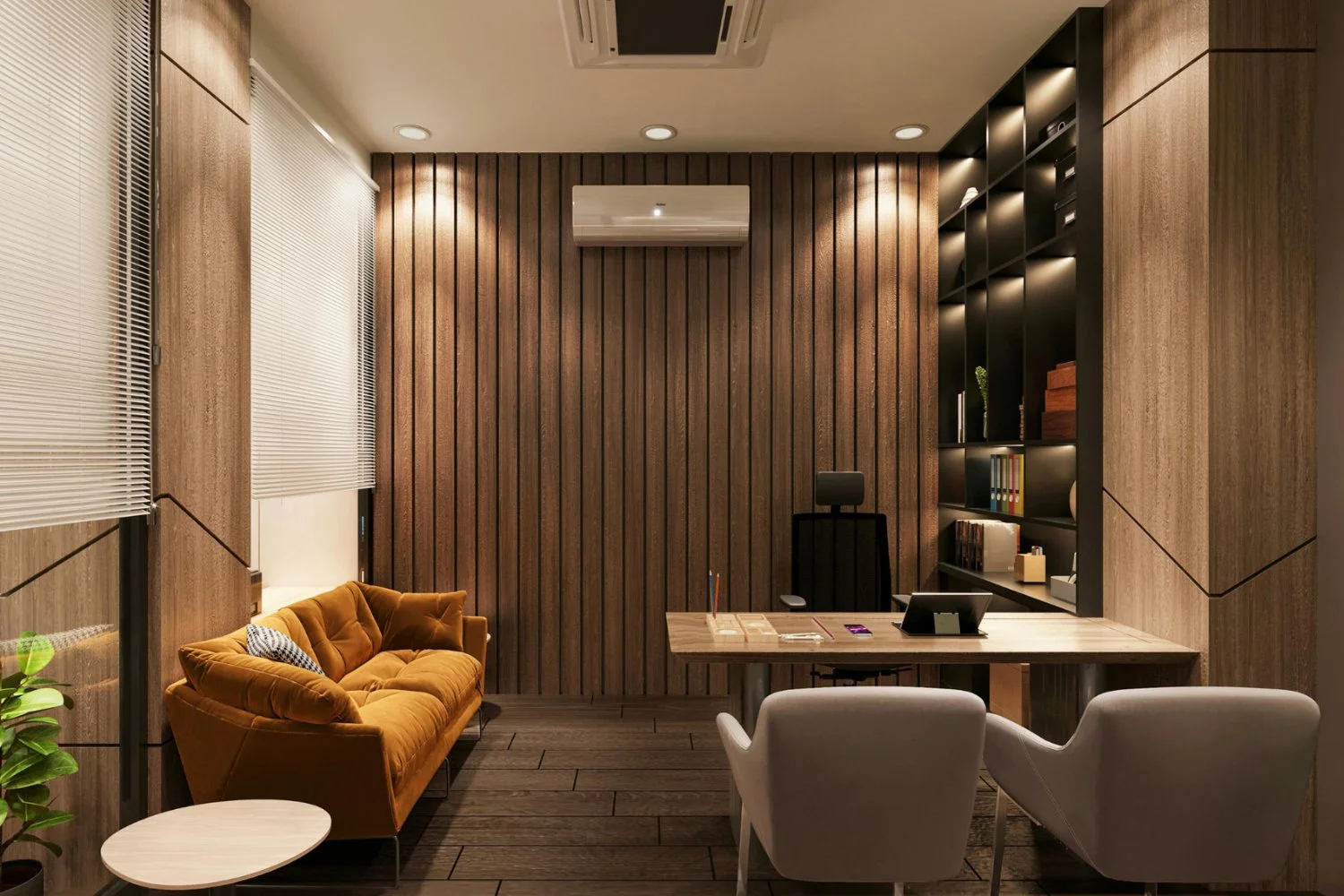
A tenant fit-out is the work that turns bare premises into somewhere a business can trade: partitions, flooring, lighting, joinery, signage and services. In a commercial lease agreement, it is usually the tenant's responsibility, carried out to a design the landlord approves, and it sets up what has to be undone at the end.
Most leases split the work in two. The landlord's works are what the landlord delivers, often an empty shell with basic services to the boundary. The tenant's works are everything after that. The line between them is worth getting in writing, because anything left ambiguous tends to end up on the tenant's side of the ledger.
Where the fit-out costs actually land
Fit-out charges are rarely just the builder's invoice. Before signing, it helps to know who carries each of these:
Design, drawings and any landlord design-approval fee
Building approvals, certification and council application fees
Services upgrades such as power, data, air conditioning or plumbing
Landlord's costs in reviewing and approving your plans
Any landlord contribution or rent-free period, and what triggers it being repaid
Insurance and site requirements during the fit-out period
Whether rent starts before or after the fit-out period ends
That last point is worth a second look. A fit-out period with no rent attached is worth real money, and it is one of the more commonly negotiated items in a lease.
What a make-good provision actually asks for
A make-good provision specifies how you must hand back the premises at the end of your commercial lease. It usually covers removing the tenant's fit-out, repairing damage, and restoring the premises to an agreed benchmark, which might be the condition at handover or a bare shell.
Read it against the fit-out clause rather than on its own, and ask three questions.
What is the benchmark condition?
Do you have to strip out works the landlord required you to install in the first place?
Can you settle your obligations with a cash payment, or must you personally carry out the strip-out and repairs?
A payment in lieu gives certainty and saves you managing a build in the middle of a move.
The benchmark problem, and a simple fix
Most make-good arguments are not really about the clause. They are about what the premises looked like on day one, two parties remembering it differently, and nobody having written it down.
A dated photographic condition report, agreed by both sides and annexed to the lease at handover, is the cheapest insurance in the document. It takes an hour to complete, and it settles the question years later when nobody can remember anything about the handover.
Here are the things that are worth recording at the same time:
Which items are fixtures that stay
Which are your chattels and can leave
What happens to anything you do not remove by the end date
Many leases provide that abandoned items become the landlord's property, and sometimes that the landlord can remove them at your cost.
Is there a limit on what a landlord can claim?
There can be. Under section 178 of the Property Law Act 2023, if a landlord sues over repair obligations, any court award is strictly capped at whichever is lower: the actual cost of the works, or the real drop in the property's market value.
There is further protection in the same section. A court may not award damages at all if the tenant proves that, on or after the lease ends, the premises have been or will be demolished, or structural alterations will make the remedial work of no or insufficient value. A landlord planning a full refurbishment of the floor is in a different position from one re-letting the space as it stands.
Whether a particular make-good clause falls inside section 178 depends on how it is drafted, since the section is directed at repair obligations rather than every reinstatement promise. It is still worth knowing the ceiling exists before you agree to a number.
Retail shop lease, or ordinary commercial lease?
This distinction shapes almost everything else, and it is settled by the premises rather than by what the lease calls itself. It is the first thing to pin down in any commercial and industrial leasing negotiation, because it changes which rules apply and where a dispute can be heard.
The Retail Shop Leases Act 1994 generally covers retail shops of 1,000 square metres or less used for a listed retail business, and shops inside a retail shopping centre with five or more retail shops. If it applies, the landlord must give a draft lease and a disclosure statement at least seven days before the tenant enters into the lease, and that statement has to set out the fit-out works required and any landlord contribution. A mismatch between the disclosure statement and the lease is a common source of later argument.
Make good itself is not regulated by the retail legislation. What the classification does change is where a dispute goes. Retail shop lease disputes start with mediation through the Queensland Small Business Commissioner and can then be referred to QCAT. Ordinary commercial lease disputes cannot be heard by QCAT at all.
There is also a timing trap. QCAT can only hear a retail dispute if the lease ended no more than a year before the dispute was lodged. Make-good disagreements arise at the end of a lease by their nature, so the clock is usually already running by the time anyone raises one.
Restaurants and other services-heavy premises
A commercial lease for restaurant premises deserves its own look, because hospitality fit-outs put far more into the building than most other uses. Exhaust canopies, grease arrestors, cool rooms, upgraded hydraulics and three-phase power are expensive to install and can be just as expensive to remove.
Two things are worth settling early. First, whether the lease is conditional on the approvals you need, including council food business licensing and any plumbing or development approvals. Second, what happens to those services at the end. A landlord may well prefer to keep a commercial kitchen in place for the next tenant, and a clause that lets the landlord elect to retain the services can save a departing operator a significant sum.
Changing the terms later
Fit-out and make good are often revisited partway through a term, when a business grows, subleases part of the space, or agrees to a refurbishment.
An amendment to commercial lease agreement terms is usually documented as a deed of variation rather than by marking up the original. If the lease is registered, the variation generally needs to be registered too, so the title reflects the deal that actually applies. That step sits on the property and conveyancing side of the work rather than the negotiation, and it is easy to let slide once the commercial terms are settled.
A short checklist before you sign
Confirm whether the Retail Shop Leases Act applies to the premises.
Check that the disclosure statement and the lease describe the same fit-out obligations.
Define the benchmark condition for make good in plain words.
Agree and annex a dated condition report at handover.
List which fit-out items you may remove and which stay.
Clarify whether works the landlord required you to install must be stripped out.
Note whether a payment in lieu is available, and who decides.
Diarise the make-good dates against your option and expiry dates.
Talk it through before you commit.
Fit-out and make-good clauses are negotiable, and the best time to raise them is before signing the lease. If you are already near the end of a term, there is often still room for a sensible commercial outcome, particularly where the landlord has plans of their own for the space.
Our commercial team acts for both landlords and tenants, so we see these clauses from both sides and can tell you fairly quickly which parts of a draft are worth pushing on. If you are weighing up premises on the Sunshine Coast, you are welcome to get in touch for a consultation.
Disclaimer: This article is general in nature and does not constitute legal advice. If you require legal advice in relation to your personal circumstances, you must formally engage our firm or another firm to provide legal advice in relation to your matter. Bradley & Bray lawyers take no responsibility for any use of the information provided in this article.